

Boiled Cider Apple Sauce
Welcome to the annual Apple Season here on my blog! From late July to the end of August, we are barraged with apples from the apple tree that hangs over into our back yard, so I usually do a couple of apple recipes this time of the year.
I’ll bet you can guess the ingredients in Boiled Cider Apple Sauce: apples and apple cider. This 1877 recipe from Buckeye Cookery and Practical Housekeeping creates a flavourful apple sauce with no added sugar or spices.

You’ll find this recipe in:
Buckeye Cookery and Practical Housekeeping
By Estelle Woods Wilcox
Marysville, Ohio
1877
Historic Recipe:
BOILED CIDER APPLE SAUCE.
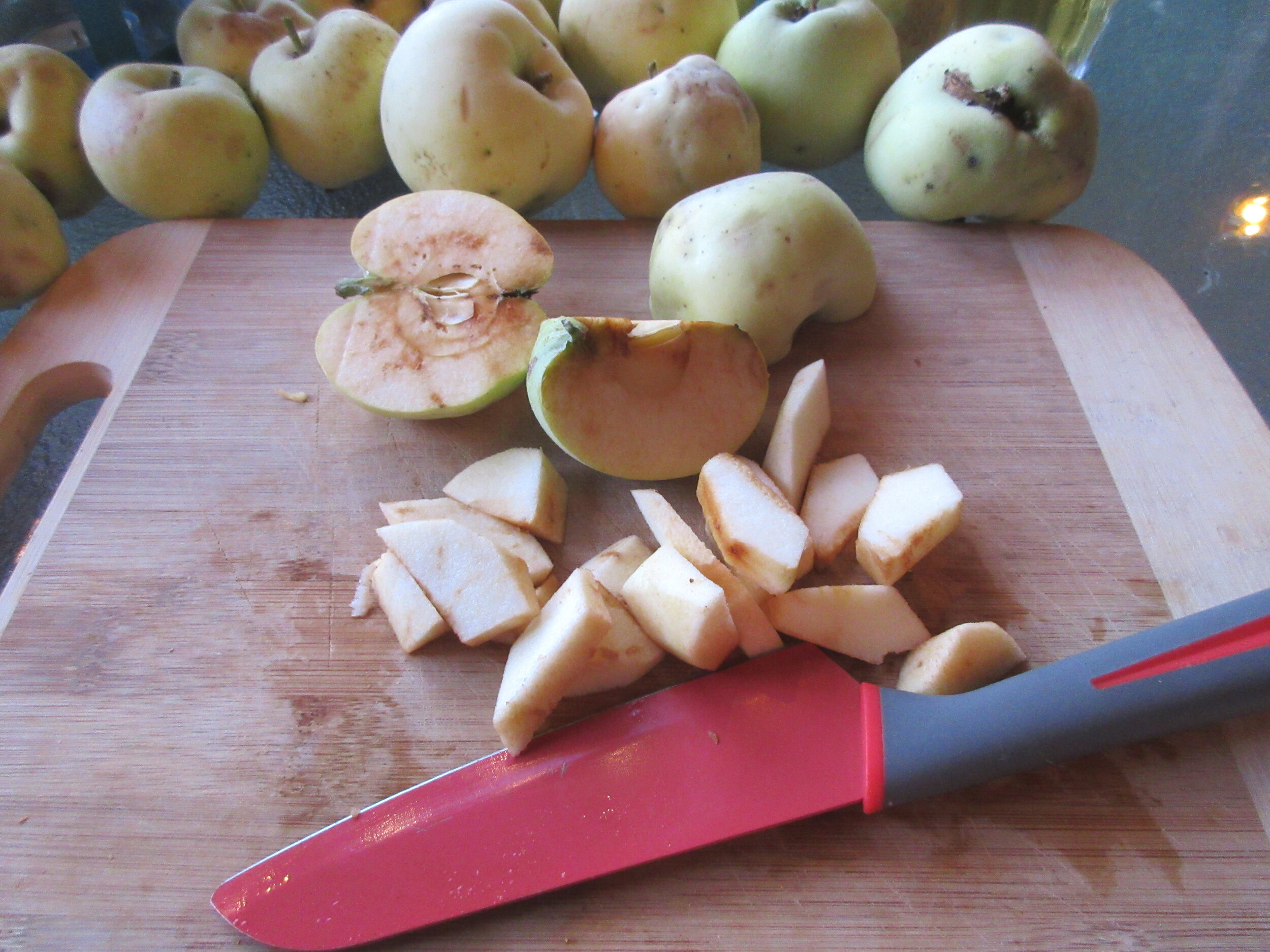
Pare, quarter and core apples sufficient to fill a gallon porcelain kettle, put in it a half gallon boiled cider, let it boil. Wash the apples and put in kettle, place a plate over them, and boil steadily but not rapidly until they are thoroughly cooked, testing by taking one from under the edge of the plate with a fork. Do not remove the plate until done, or the apples will sink to the bottom and burn. Apples may be cooked in sweet cider in the same way. - Mrs. W. W. W.
My Recipe
Boiled Cider Apple Sauce
Apples (sliced, peeled & cored)
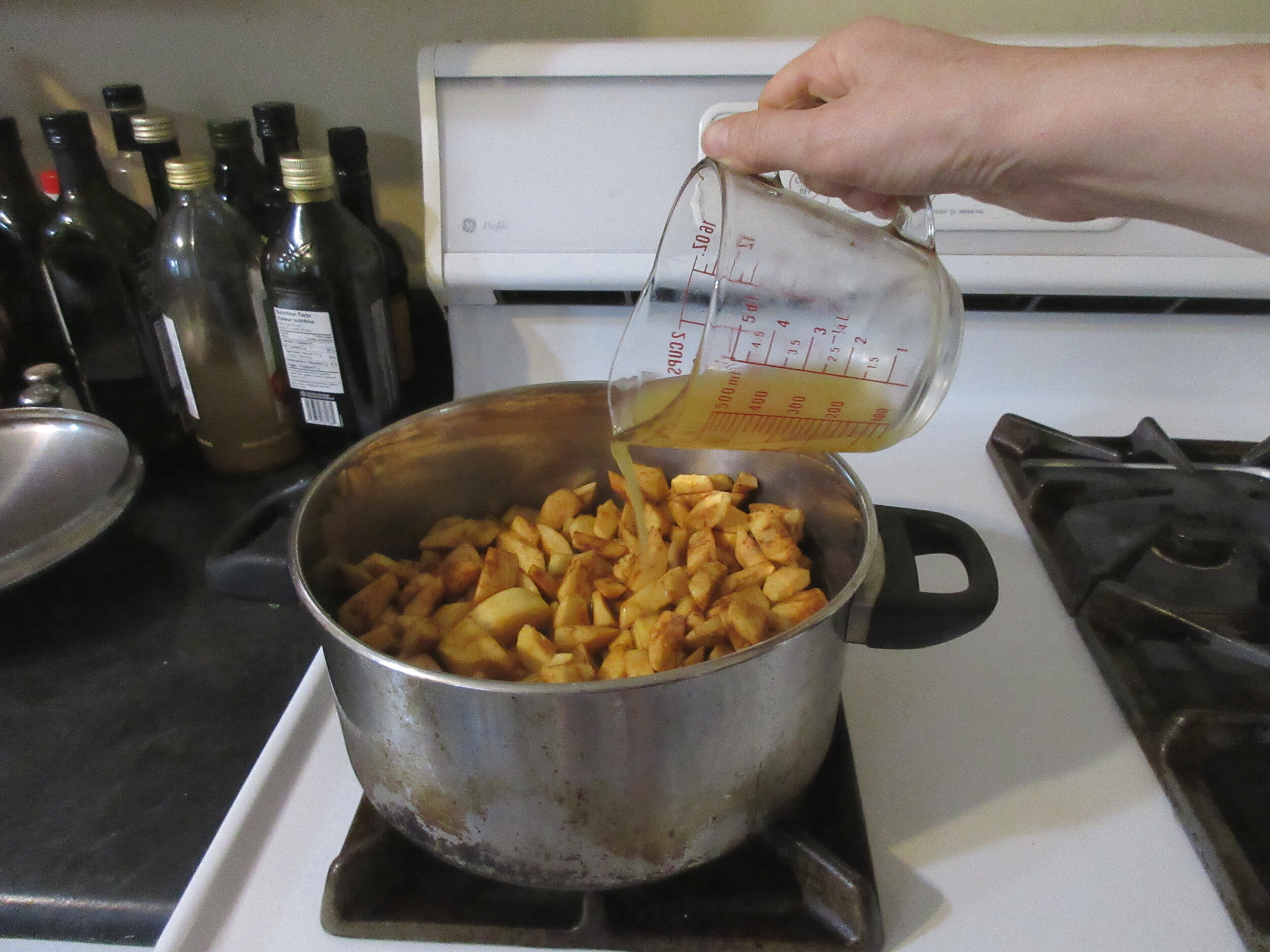
Apple Cider (alcoholic or non-alcoholic)
Use about twice the apples than apple cider in volume
I used:
10 cups sliced Apples (1135 g)
5 cups non-alcoholic Apple Cider (1.2 L)
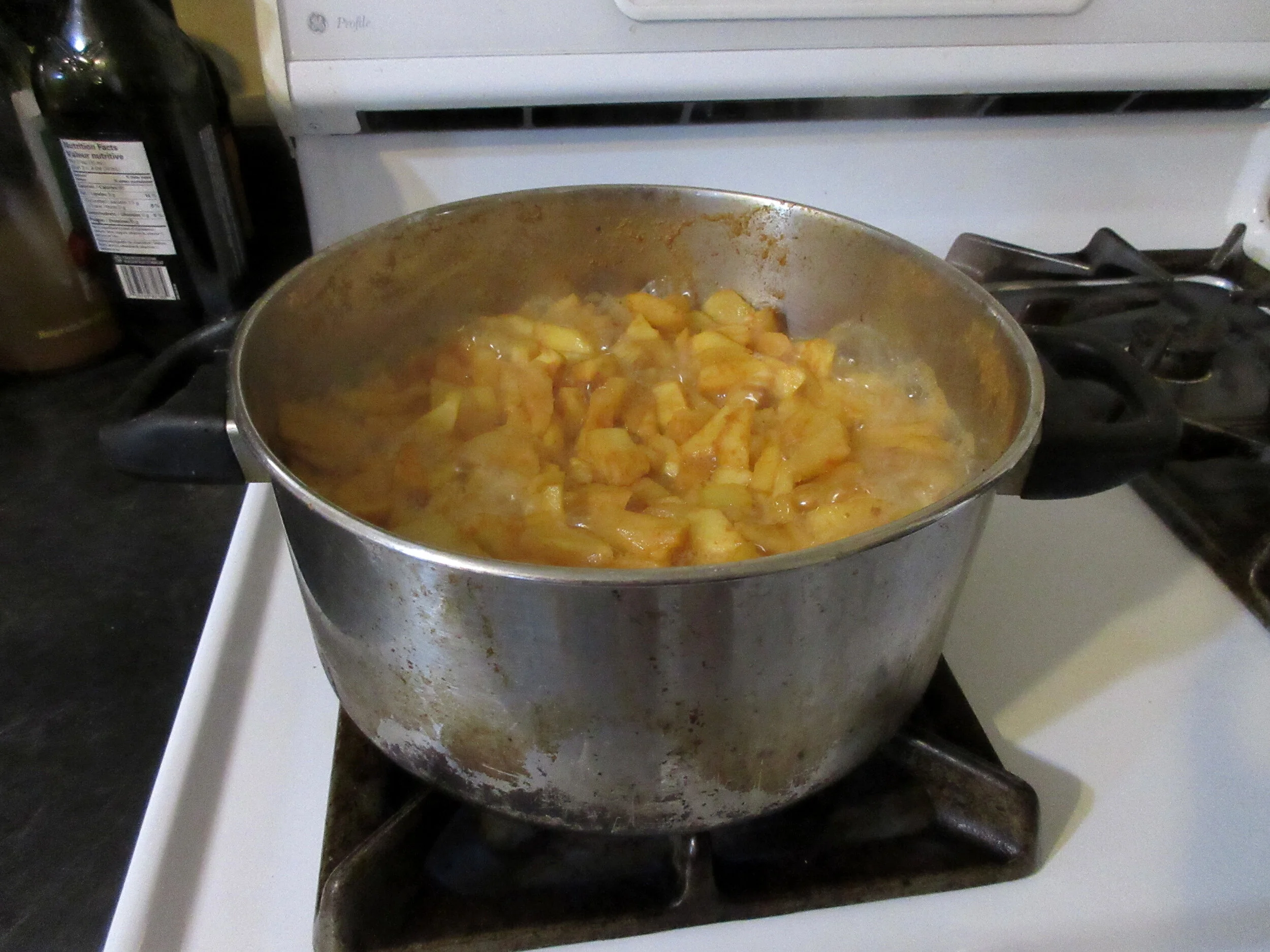
Simmer the apples and cider together over medium-low heat in a covered pot, stirring often, until the apples are soft and mushy (it took about an hour with these amounts).
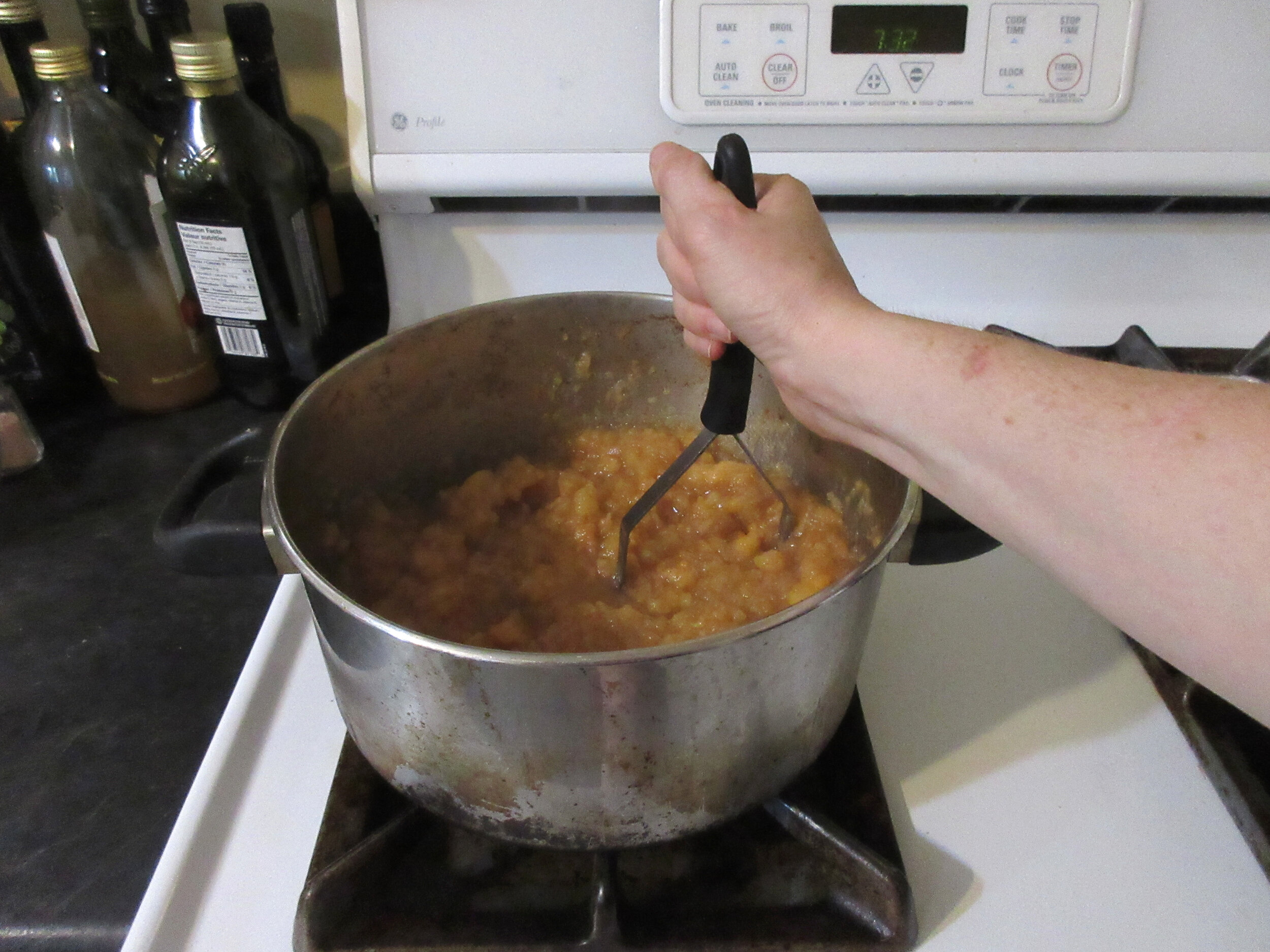
To create your sauce, pulverize the apples with a potato masher if you enjoy chunky apple sauce. Other options are pushing the sauce through a sieve with a wooden spoon or a spatula, or using a blender, food processor or immersion blender.
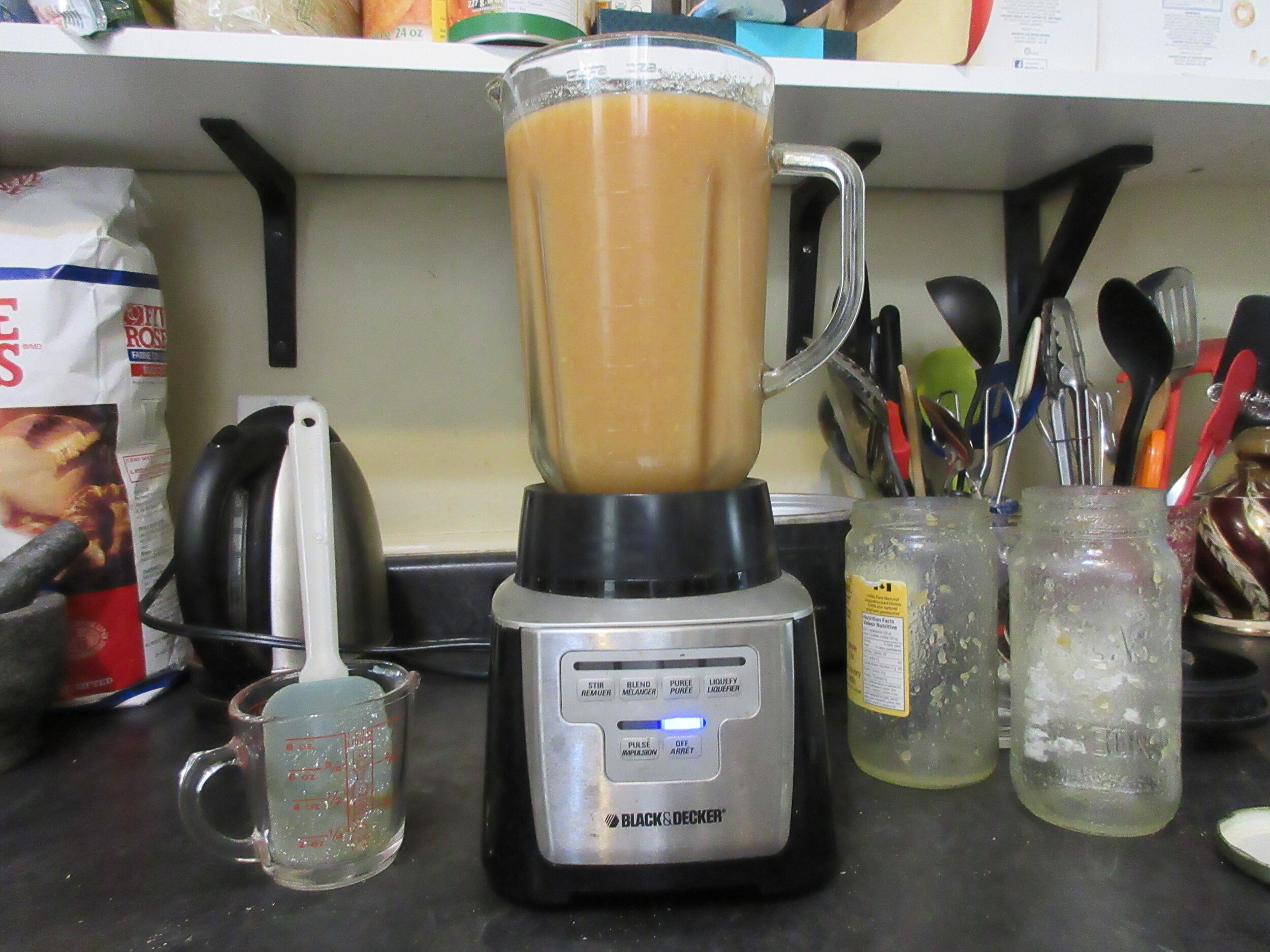
I needed add about 2 cups (473 mL) of water for a more sauce-like consistency and I ended up with about 7 cups (1.6 L) of apple sauce.

Welcome to the annual Apple Season here on my blog! From late July to the end of August, we are barraged with apples from the apple tree that hangs over into our back yard, so I usually do a couple of apple recipes this time of the year.
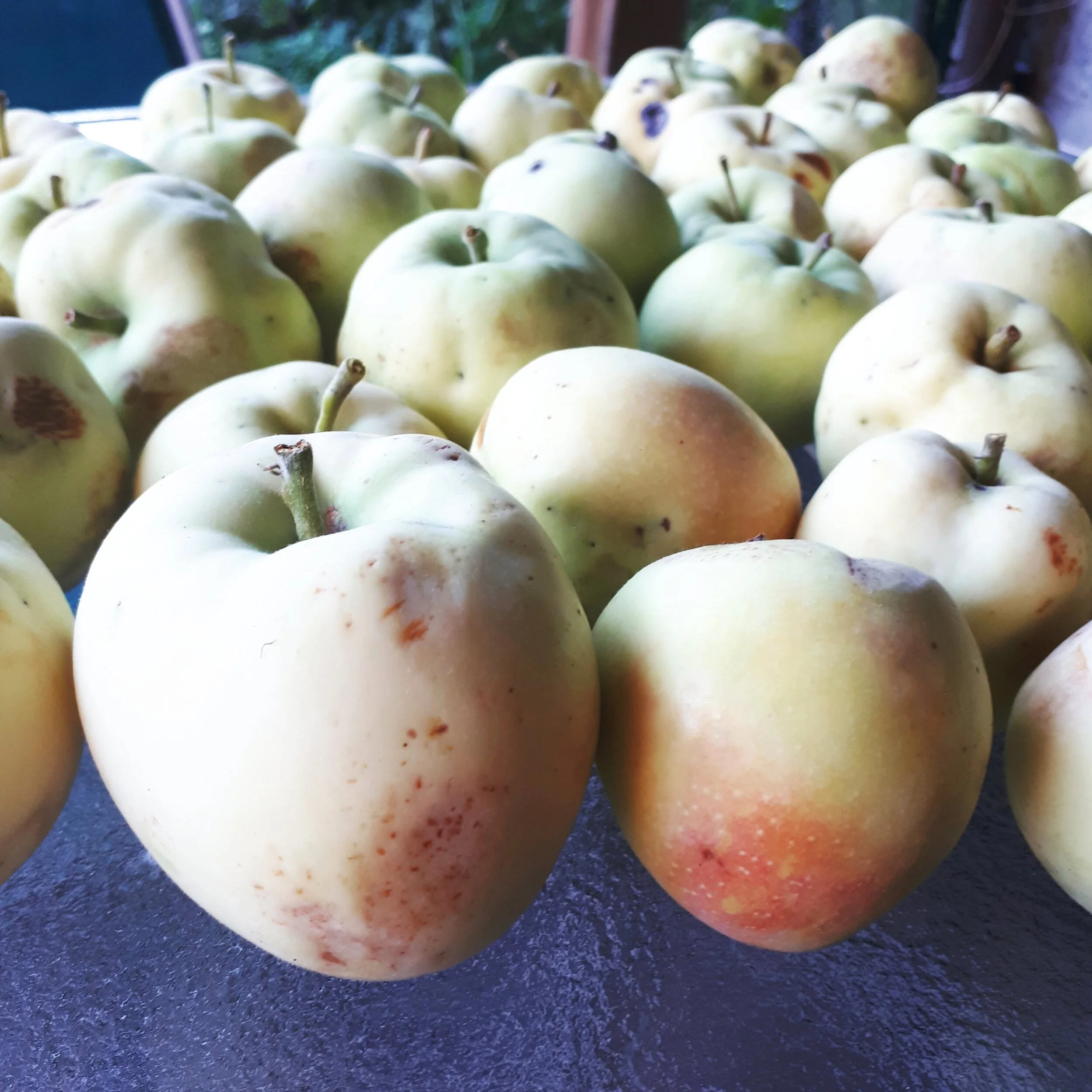
We have no idea what variety these apples are, so please comment or email if you have a guess. It is the tallest apple tree I’ve ever seen in my life (it’s taller than our 2 story house) and the apples are yellow-green with a slight rosy blush on some apples. The apples are quite dry, but they are sweet. They are so dry that I initially mushed the apples with a potato masher when I made this recipe, but I decided to puree the sauce with a blender after tasting it. Let’s just say that the dry apple chunks left in the sauce before blenderizing were not delightful.
Apple Recipe Suggestions:
If you make a huge batch of Boiled Cider Apple Sauce, you could use some of your sauce to make Apple Sauce Cake or Apple Bread. If you want to try making something different with the same ingredients, Apple Butter is another recipe that uses apples and apple cider. I also highly recommend making Apple Leather if you have an abundance of apples.
Read Buckeye Cookery and Practical Housekeeping:


Queen of Puddings
Queen of Puddings comes to us all they way from Toronto in 1877. The Home Cook Book is Canada’s first community cookbook with recipes contributed by women as a fundraiser for The Hospital for Sick Children. Queen of Puddings must have been popular in Toronto in the late 1870s because this recipe (with various names) was submitted by 5 different women to the Puddings chapter of the book!
I had plenty to share with friends & family and I described it to the people I gave it to as a lemony soufflé bottom with a jam layer and meringue on top. The reviews I received were: no response, that it was delightful, “it was very good and had a unique texture”, and it was weird to eat with mint ice cream.

You’ll find this recipe in:
The Home Cook Book
Toronto, 1877
Historic Recipes:
The Home Cook Book is Canada’s first community cookbook. Queen of Puddings must have been popular in Toronto in the late 1870s because this recipe (with various names) was submitted by 5 different women to the Puddings chapter of the book! Keep reading for my recipe, which was inspired by all five.
PRESERVES PUDDING.
Mrs. R. Beaty.
One pint of bread crumbs, one quart of milk, eight tablespoons of sugar, yolks of four eggs; beat yolks and sugar together, then stir in the crumbs with the boiling milk and the rind of one lemon. When pudding is done, beat the whites to a stiff froth with two tablespoonfuls white sugar. Spread the pudding with jam or jelly over the top, then put on the whites of egg and bake to a light brown.
QUEEN OF PUDDINGS.
One pint of bread crumbs, one quart milk, four eggs, (the yolks), piece of butter the size of an egg, sugar to sweeten, flavour with lemon. When baked, spread with jelly, then the whites of the eggs beaten to a stiff froth, with a little sugar and lemon spread of top; brown slightly in a hot oven. To be eaten with sugar and cream.
THE QUEEN OF PUDDINGS.
Mrs. John Morse.
One pint of bread crumbs, one pint of milk, the yolks of three eggs; bake in the oven a short time, until it become stiff; then place preserves over this, and beat the whites of the three eggs to a froth and lay all over this again; sprinkle white sugar on the top, and allow it to brown in the oven for a few minutes.
JELLY PUDDING.
Mrs. C. H. Wheeler.
One quart milk, one pint of bread crumbs, yolks of four beaten eggs, one-half cup of sugar; bake about half an hour; when cool, spread jelly over the pudding, beat the whites with a little sugar, and spread on top for frosting; set back in the oven a few minutes after the whites have been spread on the pudding; excellent for Sunday dinners, as it may be eaten cold.
MERINGUE PUDDING.
Mrs. C. A. Rogers.
One pint of stale bread crumbs, one quart of milk, the yolks of four eggs, butter the size of an egg, a small cup of sugar, salt, the grated rind of one lemon; bake three-quarters of an hour. When cool, spread the top with preserves or jelly; beat the whites of the eggs with five tablespoons of pulverized sugar; spread on the pudding, and brown in a quick oven; eat with cream.

My Recipe:
4 cups milk – 946 mL
2 cups breadcrumbs – 170 g
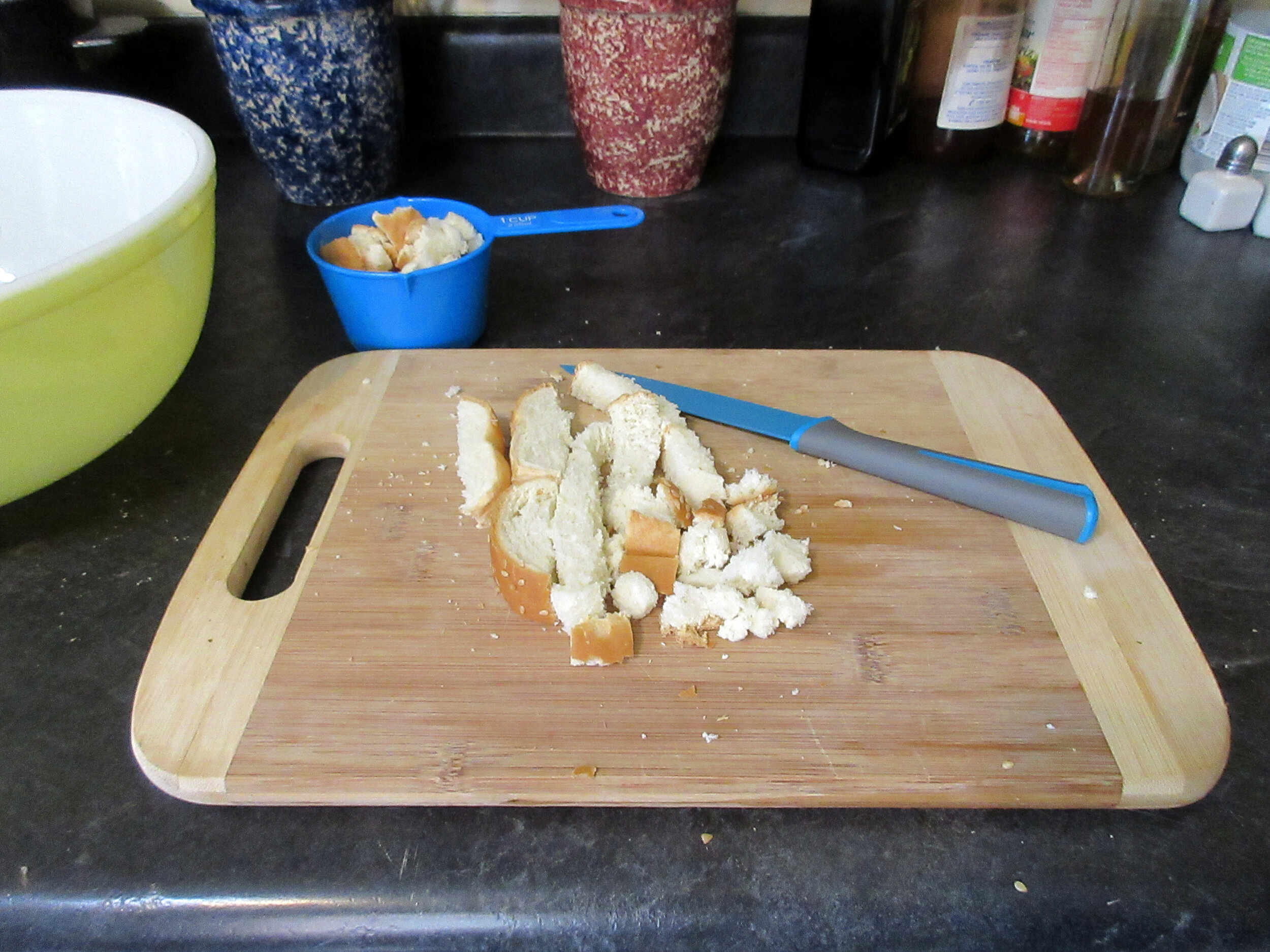
(I used roughly half cut-up bread, half store-bought breadcrumbs)
4 eggs, separated into yolks and whites
Zest of one lemon
1/2 cup white sugar – 115 g
1/4 cup butter – 57 g
Jam or jelly
1/4 cup + 1 tbsp white sugar – 70 g (for the meringue)
Cream for serving (optional)
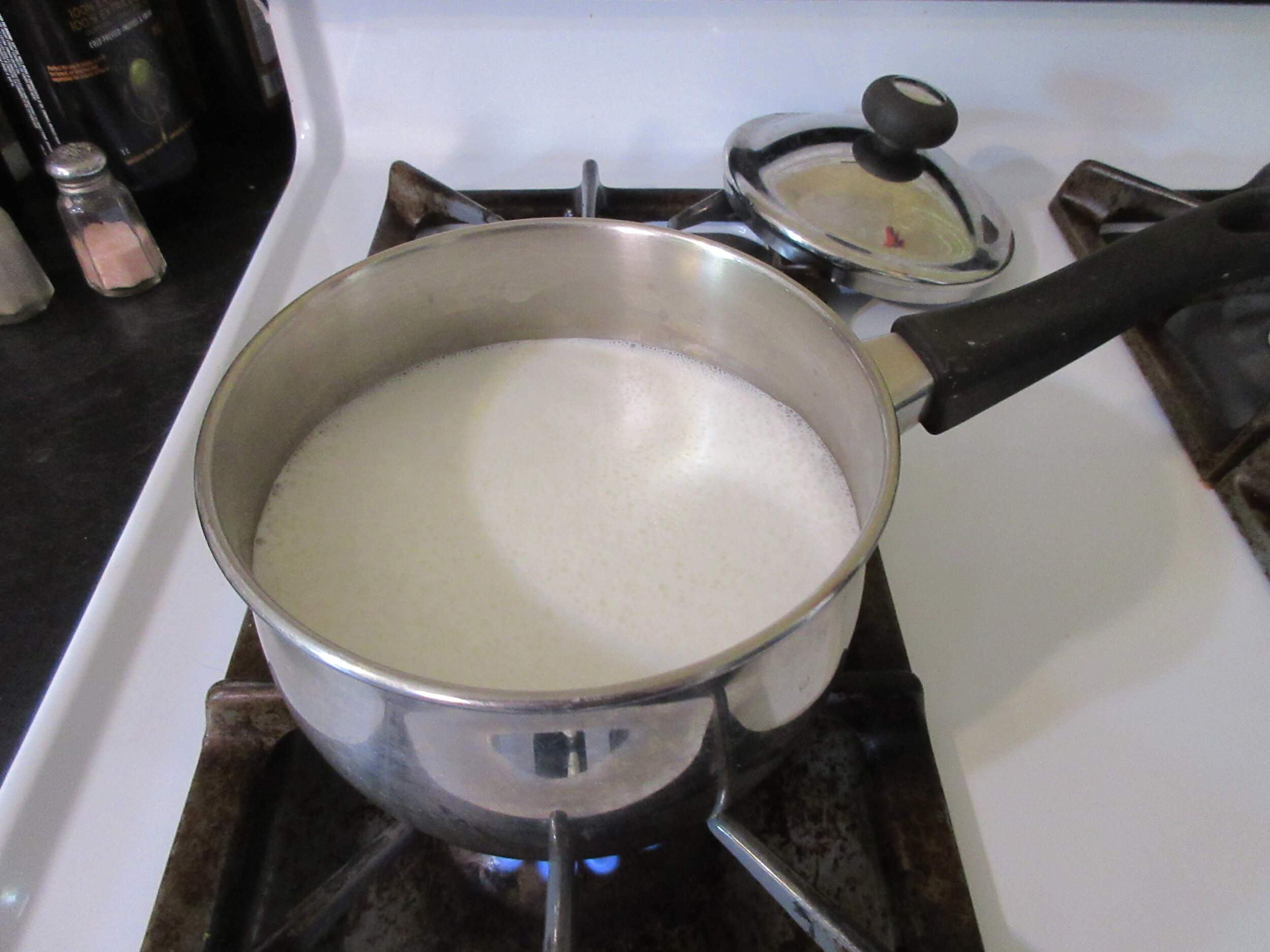
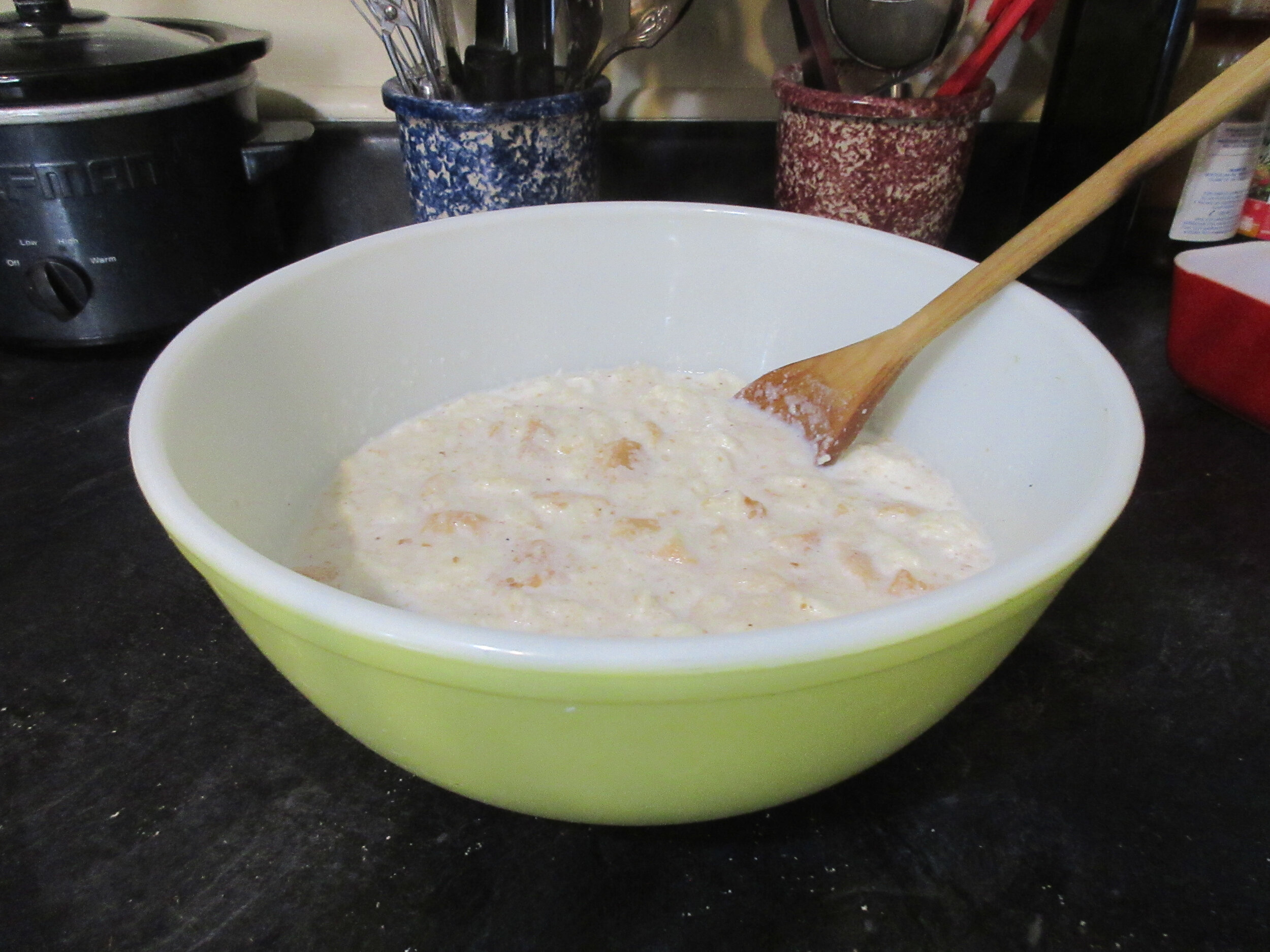
Heat the milk on the stove until boiling and add to the breadcrumbs in a large bowl. Allow the milk and breadcrumb mixture to sit for at least 20 minutes, until the bread has absorbed the milk.
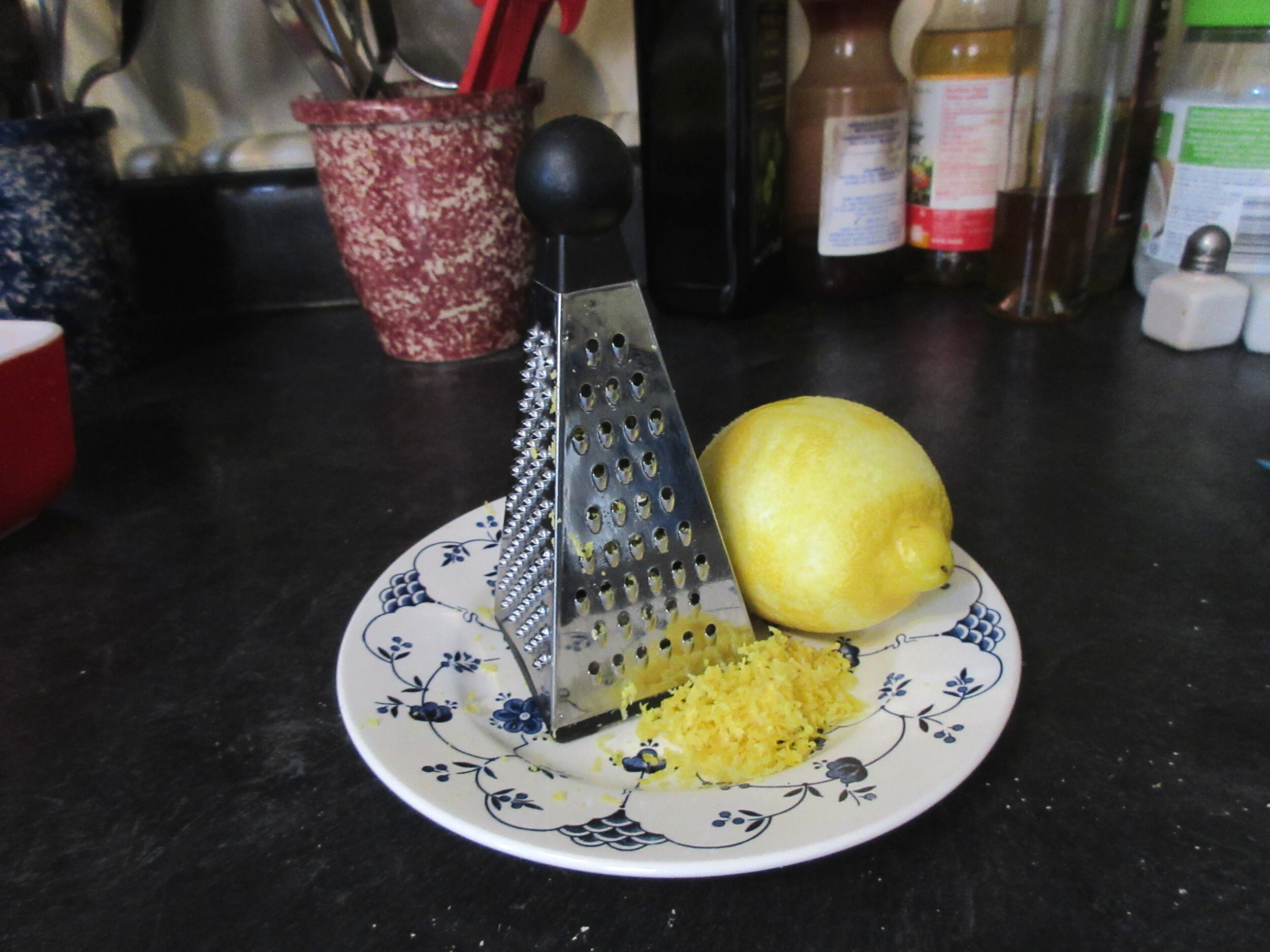
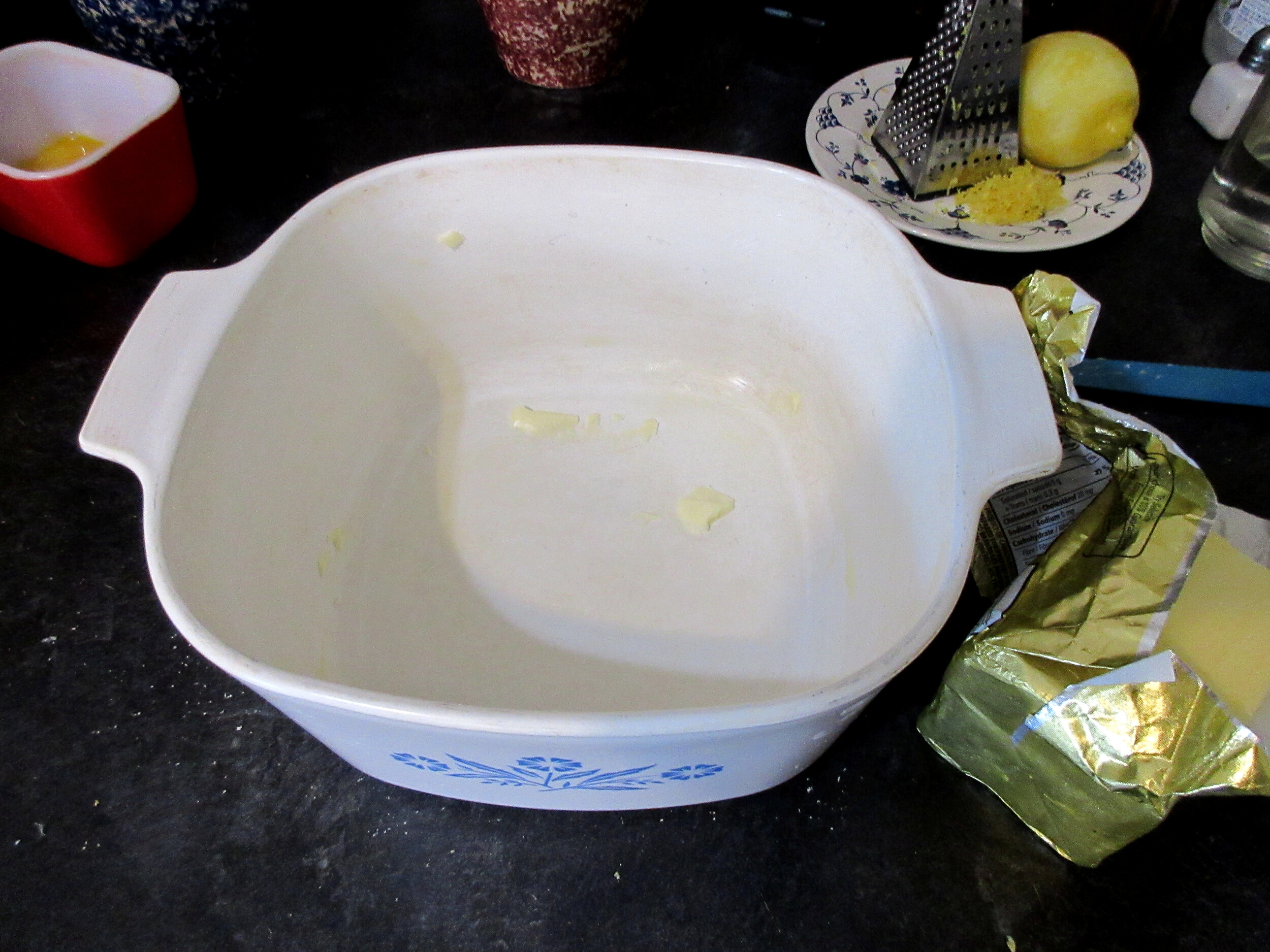
Preheat your oven to 350 F or 175 C. While you wait for the breadcrumbs to soak up the milk, separate the yolks and whites of the eggs. Beat the egg yolks and set aside the egg whites in a mixing bowl at room-temperature for making the meringue later. Grate the zest of one lemon, butter your baking dish and melt 1/4 cup (57 g) butter.
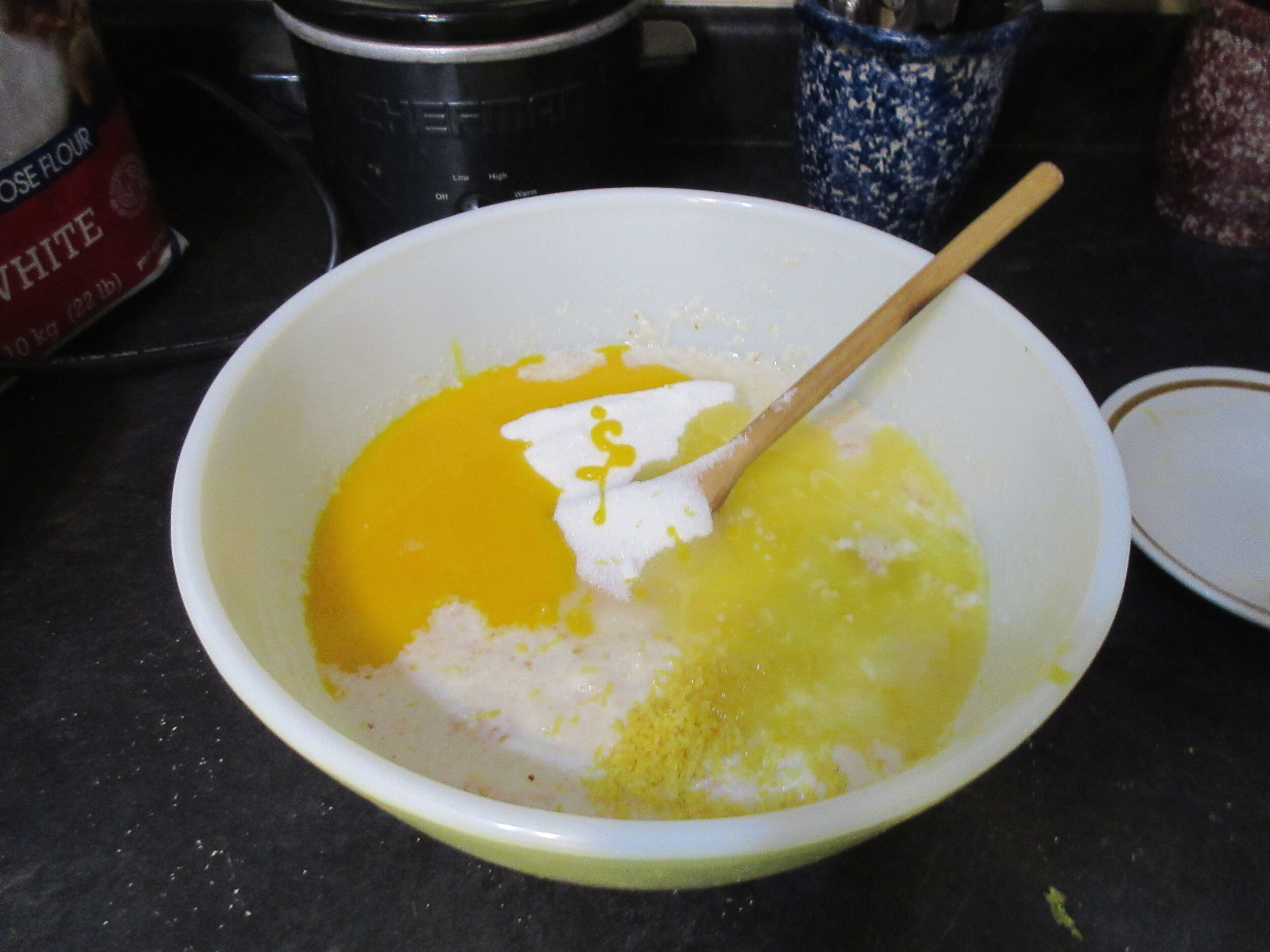
Add the melted butter, egg yolks, lemon zest and 1/2 cup (115 g) white sugar to the milk & breadcrumbs. Pour into your baking dish. I used a 12 cup or 2.8 L casserole dish and it was slightly larger than was needed.
Bake, uncovered, until it is firm in the middle (about an hour).

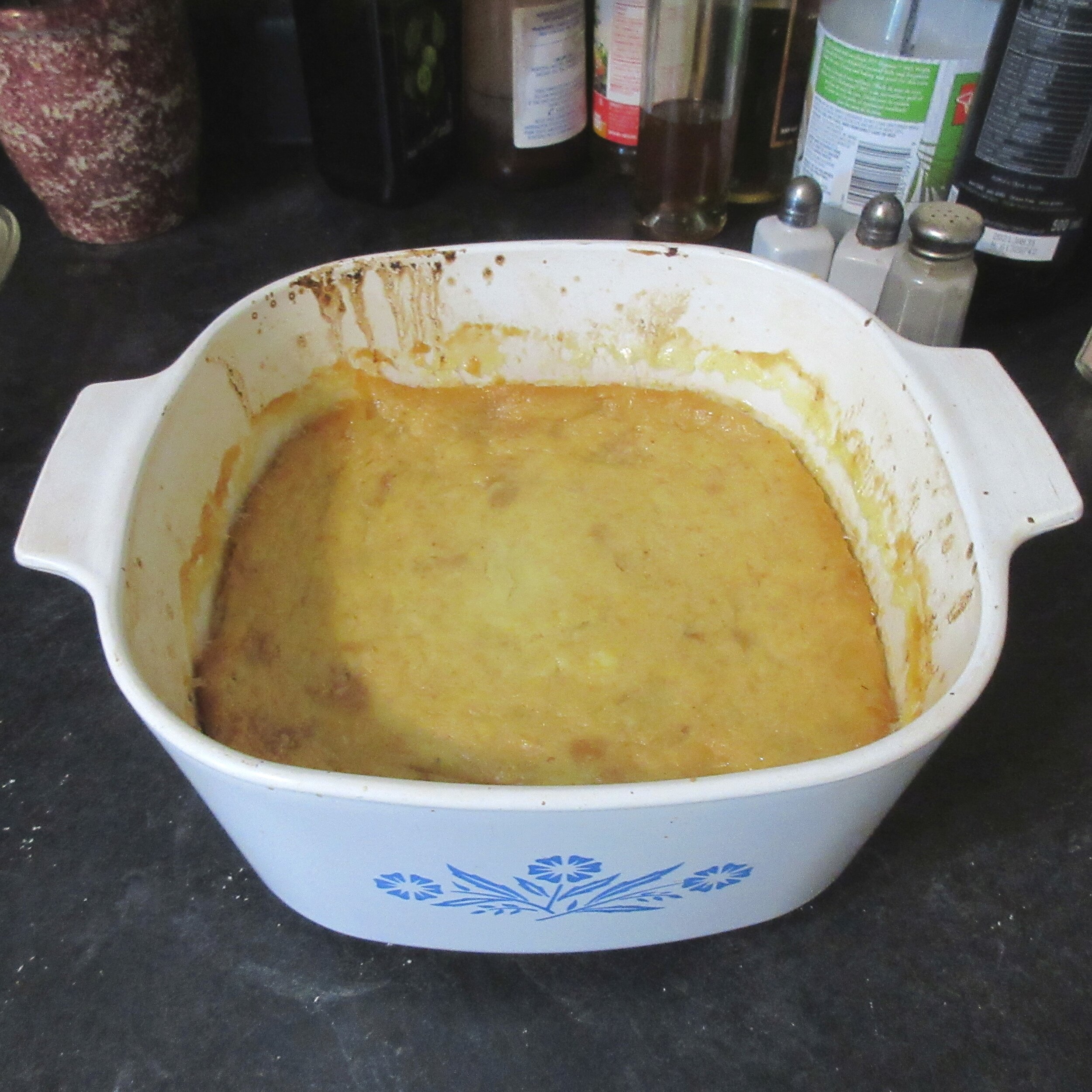
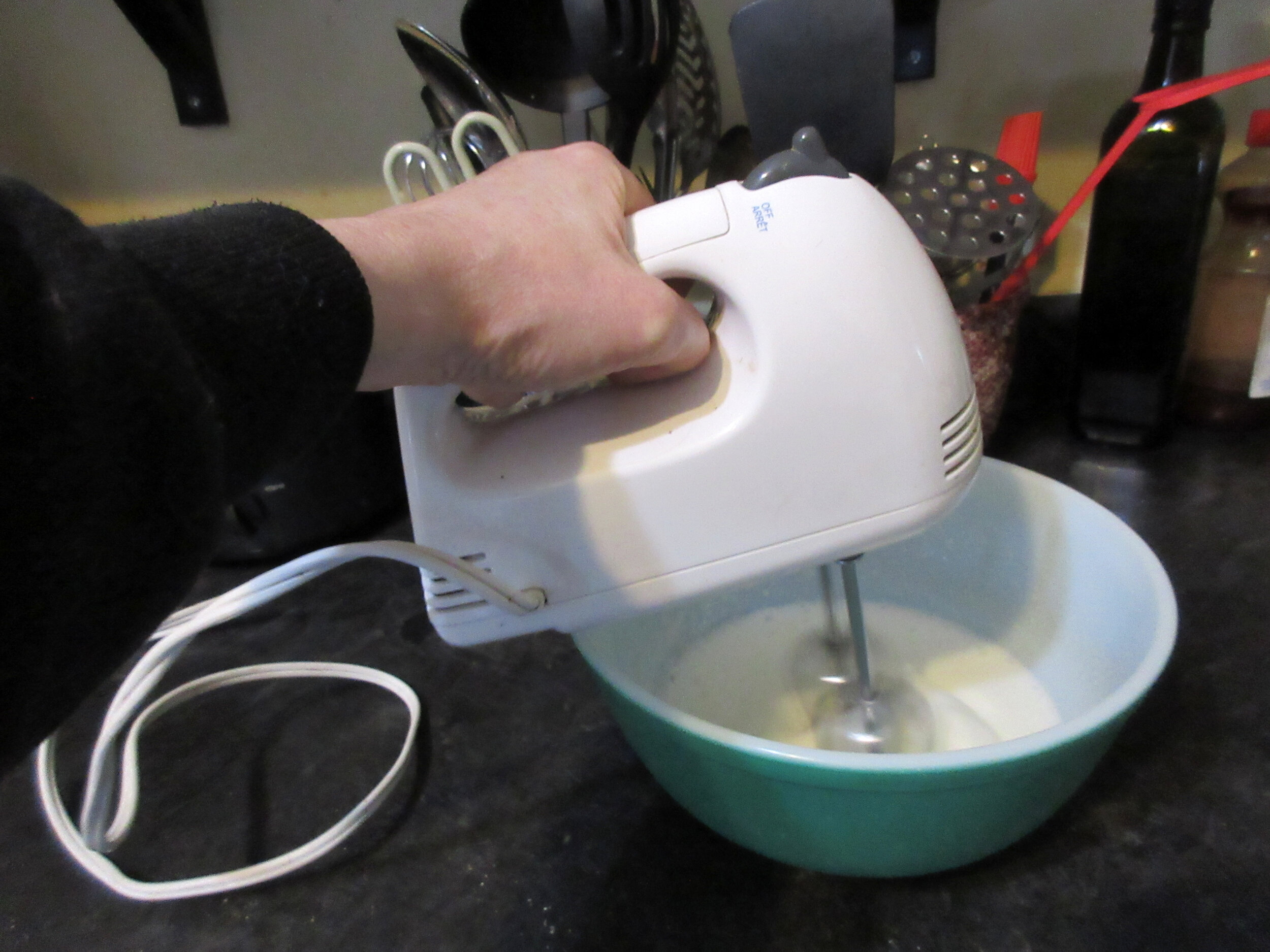
When the pudding is very close to being fully baked, beat the egg whites into a meringue, until stiff. A spoonful at a time, add 1/4 cup + 1 tbsp (70 g) white sugar to the meringue while beating. The meringue is done when you lift your (non-moving!) beater up and stiff peaks form.
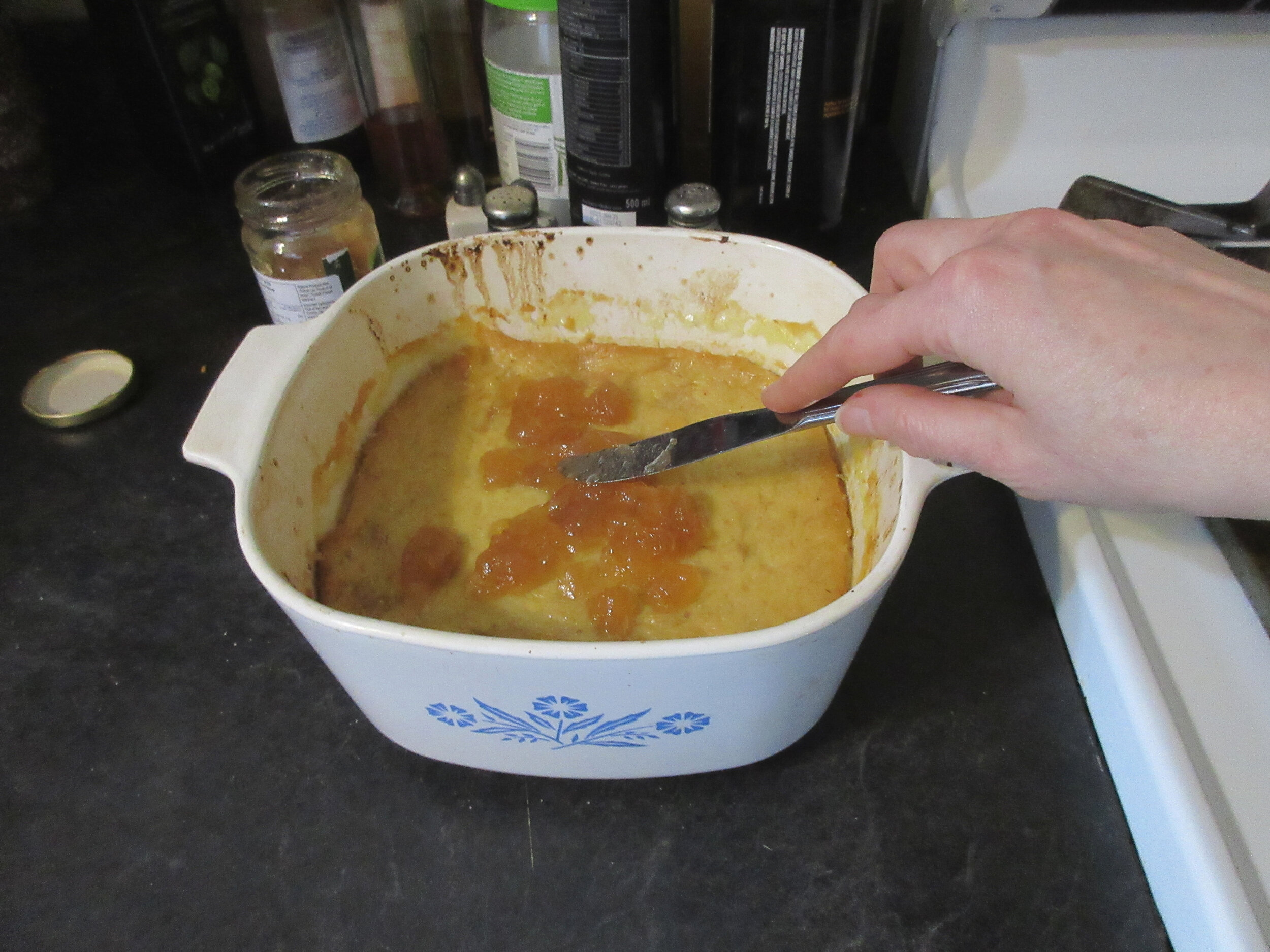
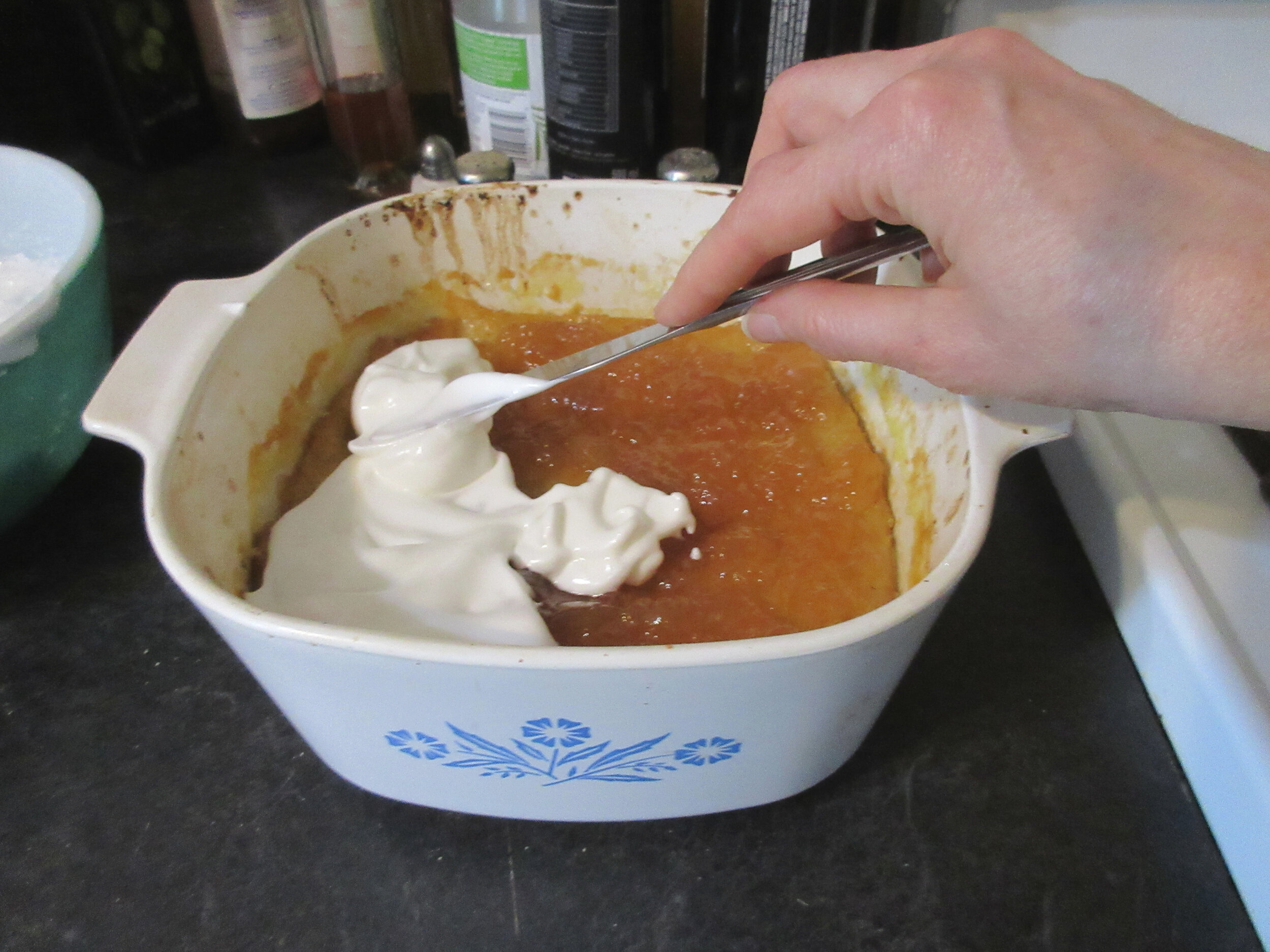
Spread a layer of jam or jelly on top of the pudding. Gently spread the meringue on top of the pudding & jam or jelly layer, then put back into the oven for about 20 minutes or until it is slightly golden on top.
Serve warm or cold with cream on top, if desired.
This Queen of Puddings recipe makes a lot. In fact, I’d make a half batch if you’re making it for 2 or 3 people. I had plenty to share with friends & family and I described it to the people I gave it to as a lemony soufflé bottom with a jam layer and meringue on top. The reviews I received were: no response, that it was delightful, “it was very good and had a unique texture”, and it was weird to eat with mint ice cream.
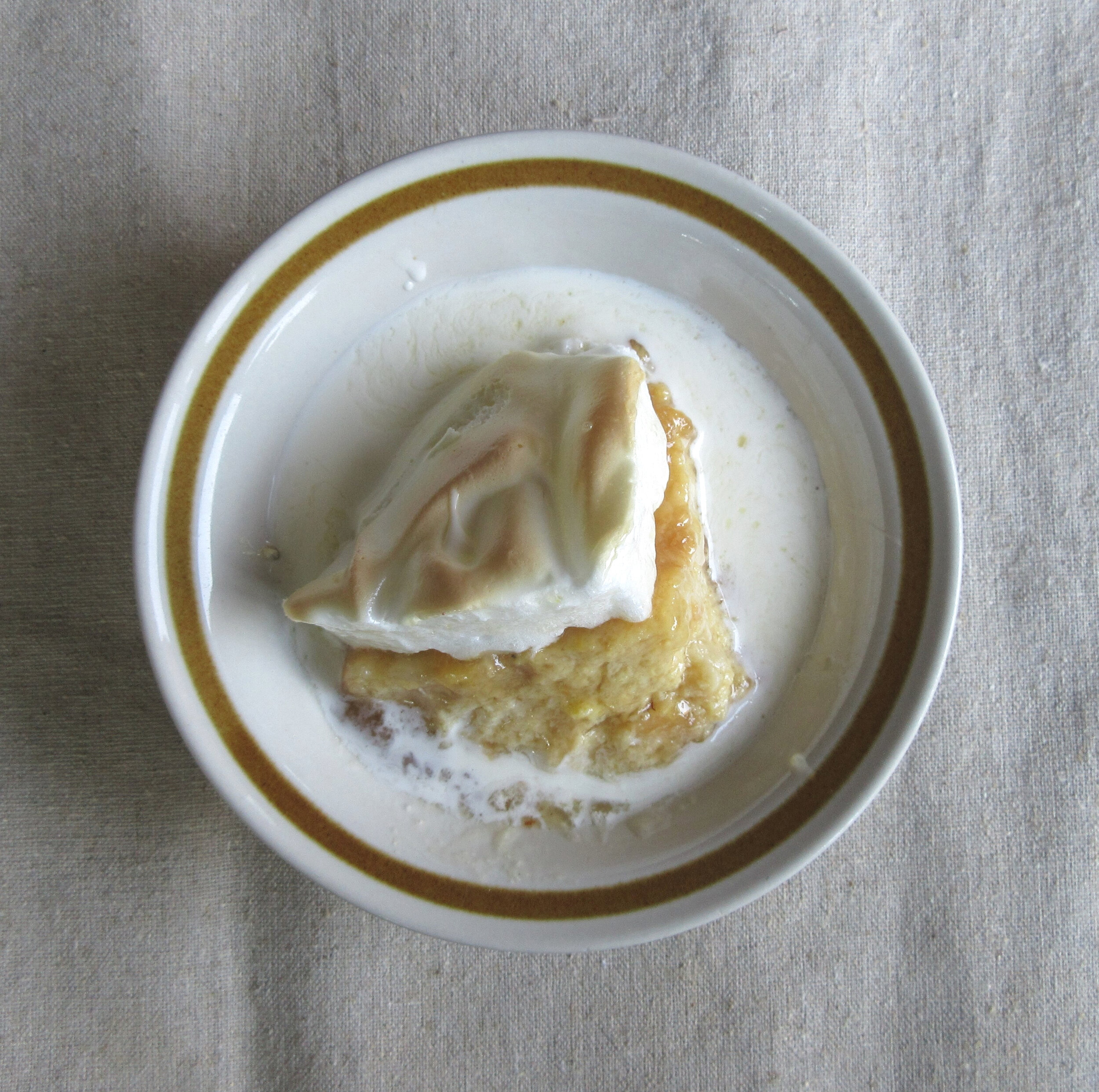
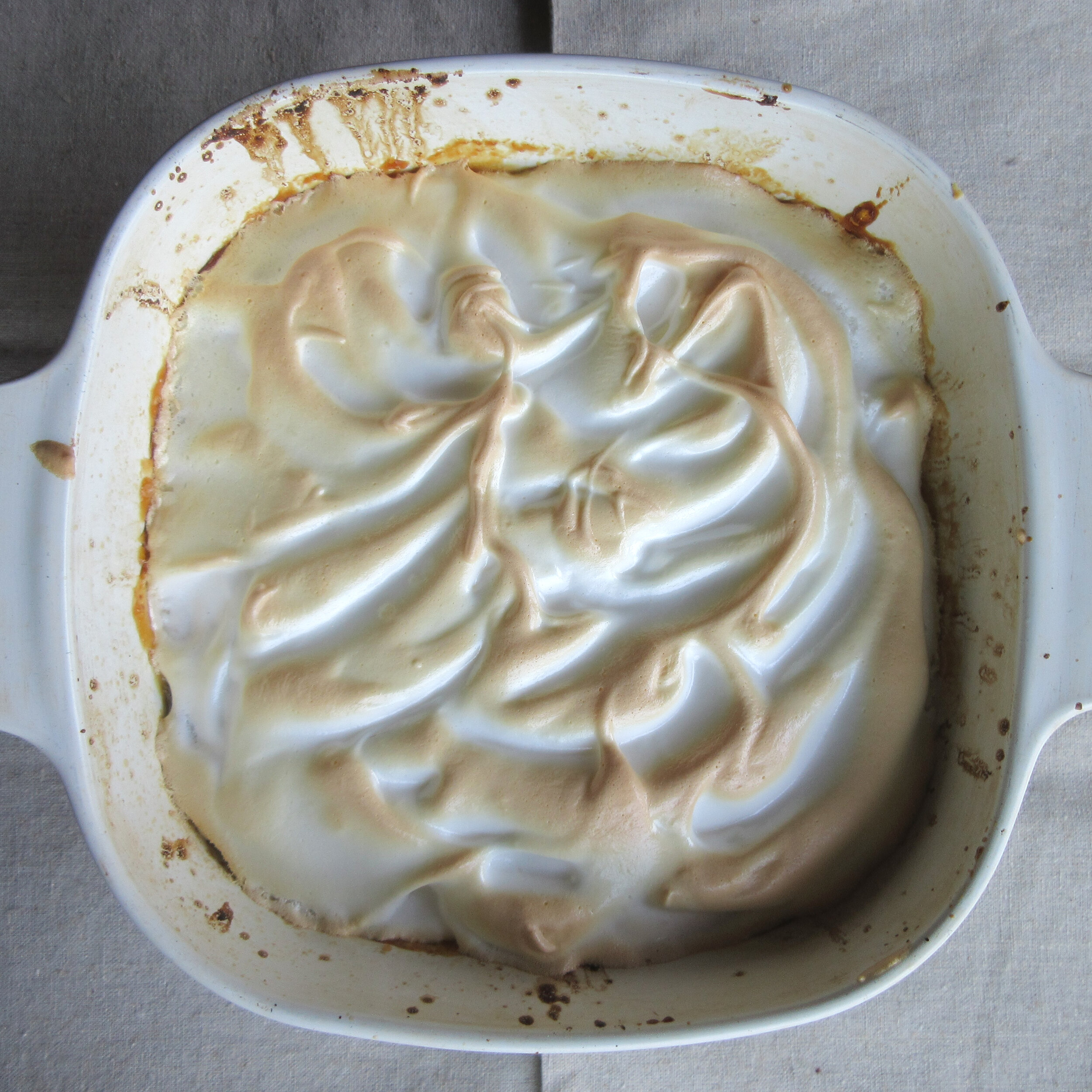
My inspiration for deciding to make Queen of Puddings was the mound of breadcrumbs taking up space in my freezer that I had saved when I made Mushroom Rolls. In fact, I had so many crusts in my freezer that I also made Pineapple Nut Stuffing at the same time and still had some crusts left over. Afterwards, the ultimate way to clear out my freezer was forced upon me. My freezer stopped working. Problem solved, no more frozen bread crusts!
These pictures and this recipe aren’t from the first time I tried making Queen of Puddings, though. For my first attempt, I decided to base my recipe on only one of the five Queen of Puddings recipes...and...it did not turn out well. I used the amounts listed in the recipe - two times the milk as breadcrumbs - but the milk didn’t absorb into the bread and I was left with a bread soup! There was no way that the bread & milk mixture was going to become firm in the oven. I ended up doubling the breadcrumbs, so that there was 4 cups of each in the pudding, but I ended up with a very firm and bready pudding at the bottom.
I had a look at all five Queen of Puddings recipes in The Home Cook Book and they all list double the milk as breadcrumbs, except for one recipe, which lists equal amounts. Could 4 out of 5 recipes have the measurements wrong?
Often historic recipes don’t quite list all the necessary instructions or all the ingredient measurements, because it is assumed that you’ll know how much flour to add or you’ll know all the steps from experience. To make problems worse, likely all these recipes were submitted by people jotting them down on a piece of paper. In these instances, when I have a recipe mystery on my hands and I can’t find the answer in another historic source, I turn to the recipes of today.
All the contemporary Queen of Pudding recipes called for more milk than breadcrumbs, so I knew it likely wasn’t the ratio that was off. But there was one step that was mentioned in only one of the five historic recipes that was in every single contemporary recipe: “then stir in the crumbs with the boiling milk”. So that was the problem! When the milk is boiling, the breadcrumbs absorb much much more of the milk than if it is cold.
For my second try at making Queen of Puddings, I decided to take bits and pieces of all five recipes. I knew from the first time that I really liked the grated lemon zest, so I made sure to include it, even though it’s not in all five recipes. I used pear jelly the second time, but I actually prefer the flavours of the blackberry jelly that I used in batch #1. The final pudding is much more light and soufflé-like and I prefer it to the breadier and firmer texture that I ended up with my first botched attempt.
Read the Cookbook:


To restore from stroke of lightning
Cookbooks used to not only be a resource for learning how to prepare food, but would also contain medicinal recipes and household tips. I’ve been wanting to explore other facets of cookbooks, so to start with, I chose my favourite remedy, To Restore from Stroke of Lightning. This “cure” is my favourite because it makes me chuckle every single time, no matter how many times I read it.
This helpful tip is found in the Medicinal Receipts chapter in The Home Cookbook, published in 1877, which was Canada's first fund-raising community cookbook and the best selling Canadian cookbook in the 19th-century. I had the vague thought that I had an ancestor who was killed by lightning, so I did some research and found out who it was! In this blog post, you’ll read the story of my Great-Great-Great-Great Grandfather’s death, along with a few other tales from that branch of my family tree.

The first photograph taken of lightning in 1882 by William Jennings, from the collections of The Franklin Institute
Found in:
The Home Cook Book
Toronto, 1877
TO RESTORE FROM STROKE OF LIGHTNING. - Shower with cold water for two hours; if the patient does not show signs of life, put salt in the water, and continue to shower an hour longer.

Cookbooks used to not only be a resource for learning how to prepare food, but would also contain medicinal recipes and household tips. I’ve been wanting to explore other facets of cookbooks, so to start with, I chose my favourite remedy, To Restore from Stroke of Lightning. This “cure” is my favourite because it makes me chuckle every single time, no matter how many times I read it.
This helpful tip is found in the Medicinal Receipts chapter in The Home Cookbook, published in 1877. This cookbook was "Compiled by recipes contributed by ladies of Toronto and other cities and towns: Published for the benefit of the Hospital for Sick Children", and was Canada's first fund-raising community cookbook. It became the best selling Canadian cookbook in the 19th-century, selling over 100, 000 copies by 1885. Most of the recipes & suggestions bear the name of its contributor, but somehow this suggestion remains unclaimed.
This would have been a very short blog post, because I don't have much else to say about this technique for reviving someone after being hit by lightning other than "don't try this at home" and to wonder how much adding salt to the water would improve the situation. The blog post would end here, except that I had this vague thought:
Don't I have an ancestor who was killed by a lightning strike?
It turns out that I do! I did a little bit of digging and would like to introduce you to my Great-Great-Great-Great-Grandfather, John Yake Sr.

Since John Yake Sr. died in the year 1840, I don't have any photographs of him to show you, but I can show you this photograph of his last home on Tenth Line near Main Street in Stouffville, Ontario. It was in this home that he may or may not have been hit by lightning.
The story of his death varies according to the account. In all cases, John was with his fifteenth & youngest child, Anna, who was about 5 years old at the time. John and Anna may have been walking in a field when the lightning hit. Some stories specify that they were walking in a corn field. John also may have been comforting Anna on his knee in their home, potentially in the second room on their house's main floor, and Anna may have been knocked under a bed by the lightning. In all the stories, Anna survives the lightning strike and her father was killed.
This would have been the end of this blog post, but...
...then I had a closer look at his fifteen children, born between 1808 and 1835. The first extraordinary fact is that all fifteen children made it to adulthood! The second slightly unsettling fact is that four of the fifteen (including my Great-Great-Great Grandfather John Yake Jr.) married members of the Kester family. Then I had a closer look at the years of their births and deaths. Rachel Yake, #10, was the sibling who passed away at the youngest age: 58 years old, which is remarkable for that time period. Jacob (#1) and Catherine (#14) lived to be 94 and 90 years old. The second-born Adam Yake lived to be 105, his brother David (#3) lived until he was 107 and amazingly the thirteenth child, Elizabeth Yake, lived to see her 110th birthday.
This blog post could have ended on this impressive note, but I continued to research...
...and found out that John Yake Sr. and his son Hiram Yake were Innkeepers. John Yake Sr. operated a hotel next to his home on the southeast corner of Main Street and Tenth Line in Stouffville. After his death, his son Hiram took over the enterprise. Hiram was a go-getter, let's just say. He was a tanner by trade, a farmer, a landlord, an innkeeper and also owned a shoemaking shop.
In 1854, Hiram purchased the building across the street on the southwest corner of Main Street and Tenth Line and turned that building into the second Yake Hotel. His father's hotel building was turned into a tinsmith's shop on the main floor with Hiram Yake's shoemaking shop on the second floor, where he employed twelve men to cobble shoes from the leather treated at his tannery. After the tinsmith & shoemaking shops, the first Yake hotel building housed general & dry goods stores and was used for storage before it was demolished in 1938.


Here we have an undated photograph of the second Yake Hotel, along with a screen capture from Google maps of the same building today. It looks like the building is used as an apartment building these days.
I found some rose-coloured stories about Hiram Yake nestled in the family histories. These Yake histories recount that Hiram went by the nickname Old King Barney and that he claimed that everything he touched turned to gold. Hiram is reputed to not have smoked or drank himself, and only sold these vices to others as a part of his livelihood. The words 'determined', 'naturally generous' and 'ruled the roost' are used to describe him. It is also claimed that Hiram always had a second dinner table ready in his home to feed anyone who was hungry, and that he always gave $20 in church collections.
With two hotels and plenty of family living nearby, it's not a surprise that the corner of Main Street and Tenth Line in Stouffville became known as Yake's Corners. But it also had another nickname: Brimstone Point.
In 1895, the Stouffville Free Press ran an article about the good ol' days earlier in the nineteenth century: "Yake's corner became known by the somewhat suggestive, yet euphonious name of Brimstone Point. Cock-fighting and horse-racing were familiar village sports. It was not unusual to close the week with a 'sport' and settle the accounts at the taverns. The Justice of the Peace generally gave a final settlement by disposing of several cases in his 'court' on Monday morning."
This article doesn't articulate that it was specifically the Yake family who ran the cock fights, horse races and the gambling that went along with it. We could assume that it might have been other unsavoury residents of Yake's Corners/Brimstone Point who were responsible. Or it could have been another business opportunity seized by Hiram to find his gold at the end of the rainbow. If you know the answer, I'd be curious to find out!
The hotel business was booming until the 1870s, when the hotel closed and Hiram's son Calvin turned the hotel building into a family home. In total, the Yake hotel building was in the family for 114 years before it moved on to other hands.
This blog post could have also ended here...
...but I thought there was a loose end that needed some tidying up. What happened to 5 year old Anna Yake, who was with her father when he was killed by lightning?
Looking into Anna Yake's life was complicated by the fact that there's a Japanese skincare, make-up and perfume line called ANNAYAKE. Anna seems to have gone by Annie at least part of the time, and she married Abraham Lehman who is described as being a Labourer, Carpenter and a Mennonite German Butcher in directories and census records.
Annie and Abraham lived in Altona, Ontario, which is very close to Yake's Corners and they had 12 children together. Alice and Charles passed away at 4 and 1 years old, and twins were stillborn. Willis Lehman never married & lived to be 93 years old, but his 7 brothers and sisters who married produced 31 grandchildren for Anna and Abraham.
In 1877, the family moved north to Manitoulin Island on Lake Superior. In the 1881 census, Abraham is listed as a Baptist Farmer of American Dutch origin, and all 8 children are living with them at that time, from the ages of 4 to 24. Abraham died in 1890 when he was 57 years old. A year later, Annie, her 23 year old son Willis, and her two youngest children Jesse and Nancy are living together on the family farm. Anna passed away a few week's shy of her 74th birthday in 1909 and she is buried with her husband in Mindemoya, Ontario on Manitoulin Island.
I do believe that this blog post has reached its end...
...but if you are a distant Yake relative and have anything you'd like to add, please comment below!
